
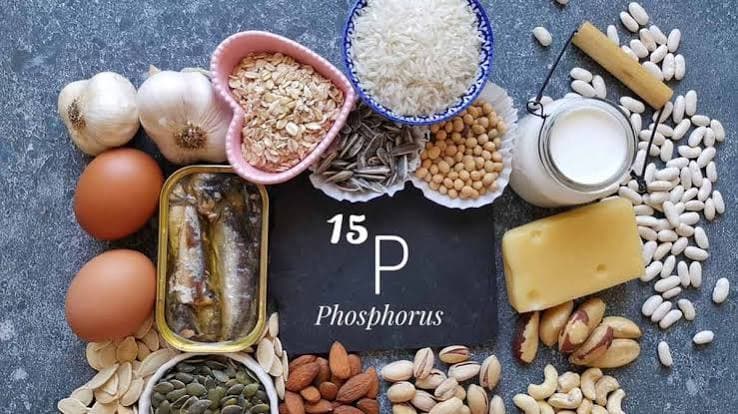
The global phosphorus supply chain is entering a period of increased strategic importance as phosphate fertilizer availability, sulfur supply, trade restrictions, logistics disruptions, and new production capacity reshape the market.
Phosphorus is essential to modern agriculture, with phosphate fertilizers representing its most important commercial application. The supply chain extends from phosphate rock mining and sulfur procurement to phosphoric acid, phosphate fertilizers, international shipping, and agricultural markets.
In 2026, disruptions to sulfur flows through the Strait of Hormuz and uncertainty surrounding Chinese phosphate exports have highlighted how vulnerable the wider phosphorus value chain can be to upstream and geopolitical risks.
How the Global Phosphorus Supply Chain Works
The phosphorus supply chain involves several interconnected stages:
Phosphate rock → Sulfuric acid → Phosphoric acid → Phosphate fertilizers → Agricultural markets
Phosphate rock provides the phosphorus component, while sulfur is critical for producing sulfuric acid, which is then used to process phosphate rock into phosphoric acid and fertilizer products such as DAP and MAP.
This interconnected structure means that a disruption in one input can affect several downstream markets.
Key Supply-Chain Risk: Sulfur Availability
One of the most important risks in 2026 has been the availability of sulfur.
Sulfur is largely recovered as a byproduct of oil and gas processing rather than produced specifically in response to fertilizer demand. This limits the ability of the sulfur market to respond quickly when fertilizer producers require additional volumes.
The disruption around the Strait of Hormuz has further exposed this vulnerability. S&P Global reported that the closure disrupted approximately 47% of global sulfur flows during the first half of 2026, contributing to production cuts among phosphate fertilizer producers.
For phosphorus producers, sulfur availability has therefore become almost as important as phosphate-rock availability.
Geopolitical and Logistics Exposure
The phosphorus supply chain is highly dependent on international transportation.
The Strait of Hormuz is particularly significant because it carries major volumes of sulfur, ammonia, and fertilizer products.
The World Bank estimates that nearly 15% of global DAP exports, around one-third of global sulfur trade, and approximately 15% of ammonia trade move through the Strait.
Disruptions can therefore affect the market through several channels:
Reduced sulfur availability
Higher fertilizer freight costs
Longer delivery times
Higher insurance costs
Regional supply shortages
Increased inventory requirements
For import-dependent buyers, logistics risk can become as important as the underlying commodity price.
China Adds Another Layer of Supply Uncertainty
China remains an important factor in global phosphate trade.
Chinese phosphate fertilizer export restrictions introduced in late 2025 created uncertainty over the availability of DAP and MAP in international markets. By September 2026, market participants were still uncertain about the timing of a broader return of Chinese exports.
This creates a major supply-chain consideration for international buyers.
A change in Chinese export policy can quickly alter:
Global fertilizer availability
Regional price spreads
Import requirements
Supplier competition
Inventory strategies
For procurement teams, monitoring Chinese export policy is therefore essential when assessing future phosphate availability.
Morocco and the Gulf: Different Supply Positions
Morocco remains one of the world's most important phosphate-resource and fertilizer-producing regions.
The country holds a very large share of known global phosphate reserves and is a major exporter. However, its phosphate industry also depends heavily on imported sulfur, much of which traditionally comes from Gulf suppliers.
This creates an interesting supply-chain dynamic:
Morocco has significant phosphate resources but remains exposed to external sulfur supply.
Saudi Arabia represents another major phosphate production center, with Ma'aden's Ras Al-Khair complex forming part of a phosphate fertilizer system of roughly 6 million tonnes per year. Disruptions to Gulf shipping can therefore affect both raw-material flows and finished fertilizer exports.
Supply Expansion Creates New Opportunities
Despite current supply risks, the phosphorus market also offers significant opportunities for capacity expansion.
Large phosphate projects are being developed or planned in regions including:
Morocco
Saudi Arabia
Algeria
Egypt
Iraq
Uzbekistan
CRU expects phosphate investment to continue building momentum, particularly in Morocco and Saudi Arabia, while other projects are attracting foreign investment in higher-risk jurisdictions.
New capacity could eventually improve global supply security, but project announcements should not be treated as equivalent to actual available production.
Procurement teams should monitor:
Announcement → Financing → Construction → Commissioning → Ramp-up → Export availability
Regionalization Is Becoming More Important
The recent disruptions demonstrate why buyers are increasingly interested in diversified supply chains.
Instead of depending heavily on a single origin, buyers can evaluate:
Multiple phosphate producers
Alternative sulfur sources
Different shipping routes
Regional inventories
Long-term supply contracts
Strategic stockpiles
Alternative fertilizer formulations
Regionalization can reduce exposure to disruptions, although it may also increase procurement complexity and inventory costs.
Market Opportunities
The changing phosphorus supply chain is creating opportunities for several groups.
1. New Producers
Supply shortages and elevated prices can improve the economics of new phosphate projects.
2. Alternative Suppliers
Buyers affected by export restrictions may seek suppliers from different producing regions.
3. Logistics Providers
Changes in trade routes can create demand for alternative shipping, storage, and transshipment solutions.
4. Regional Warehousing
Higher supply uncertainty can increase the value of strategically located inventories.
5. Specialty Phosphate Producers
Higher-value phosphate products can provide opportunities beyond traditional fertilizer markets.
Competitive Intelligence
Companies tracking the phosphorus market should monitor several indicators.
Sulfur Prices and Flows
Changes in sulfur availability can provide an early warning for phosphate production costs.
Chinese Export Policy
Any change in export restrictions could significantly alter global supply balances.
New Phosphate Capacity
Track construction progress and commissioning rather than relying only on project announcements.
Freight and Shipping Routes
Monitor disruptions affecting Gulf, Atlantic, and alternative trade routes.
Fertilizer Affordability
Farmer purchasing power determines whether supply constraints translate into actual demand.
Inventory Levels
Government and commercial stockpiling can temporarily change apparent market demand.
Procurement Considerations
Phosphorus and phosphate buyers should adopt a broader approach to sourcing risk.
Key actions include:
Diversify suppliers geographically
Monitor phosphate-rock availability
Track sulfur supply and pricing
Maintain alternative import routes
Review inventory requirements
Evaluate long-term contracts
Monitor Chinese export policy
Track new production capacity
Qualify alternative suppliers where possible
For large agricultural and fertilizer buyers, supply security may justify maintaining additional inventory or establishing multiple qualified sources.
Food Security Adds Strategic Importance
Phosphorus is not simply another industrial commodity.
Because phosphate fertilizers are essential to agricultural productivity, disruptions to the phosphorus supply chain can eventually affect food-production economics.
The current market demonstrates this connection clearly: governments have increasingly focused on securing phosphate fertilizer supply even while some farmers defer purchases because of affordability concerns.
This creates a structural tension between short-term affordability and long-term supply security.
Looking Ahead
The global phosphorus supply chain is likely to remain highly sensitive to sulfur availability, geopolitical developments, export policies, freight conditions, and the commissioning of new production capacity.
In the near term, supply-chain risks remain significant because sulfur availability has become a binding constraint for phosphate production in several markets.
Over the medium term, new capacity in Morocco and Saudi Arabia, alongside projects in other producing regions, could improve supply availability and create additional sourcing options.
For procurement teams, the most important lesson is to evaluate the phosphorus market as an integrated supply chain, rather than focusing only on phosphate fertilizer prices.
Key Takeaways
The global phosphorus supply chain depends on interconnected phosphate-rock, sulfur, ammonia, phosphoric-acid, fertilizer, and logistics markets.
Sulfur availability has emerged as a major constraint on phosphate fertilizer production in 2026.
Geopolitical disruption around the Strait of Hormuz has affected global sulfur, ammonia, and fertilizer flows.
Chinese phosphate export restrictions remain an important source of international supply uncertainty.
Morocco and Saudi Arabia remain strategically important to future phosphate supply and capacity expansion.
New projects in several producing regions could create medium-term sourcing opportunities.
Supplier diversification, inventory planning, and alternative logistics routes can reduce procurement exposure.
Sources
ICIS — Governments are securing phosphate fertilizer supply while farmers wait
S&P Global — Sulfur scramble: Tight global supply pressures fertilizer markets
World Bank — Commodity Markets Outlook, April 2026
IFPRI — How are fertilizer markets coping with the continued closure of the Strait of Hormuz?
CRU — Commodity Outlook for 2026
Carnegie Endowment — From Hormuz to the Maghreb: The Geopolitical Reach of a Gulf Crisis
Phosphoric Acid (85%) (E338) CAS: 7664-38-2