Phosphate Rock to Fertilizer: Understanding the Global Phosphorus Supply Chain
Phosphorus fertilizers are produced through a multi-stage supply chain that begins with phosphate rock and extends through beneficiation, phosphoric acid production, fertilizer manufacturing, transportation, and agricultural application.
Understanding this chain is important for chemical buyers because disruptions at any stage can affect product availability, prices, lead times, and sourcing options.
Phosphate Rock Mining
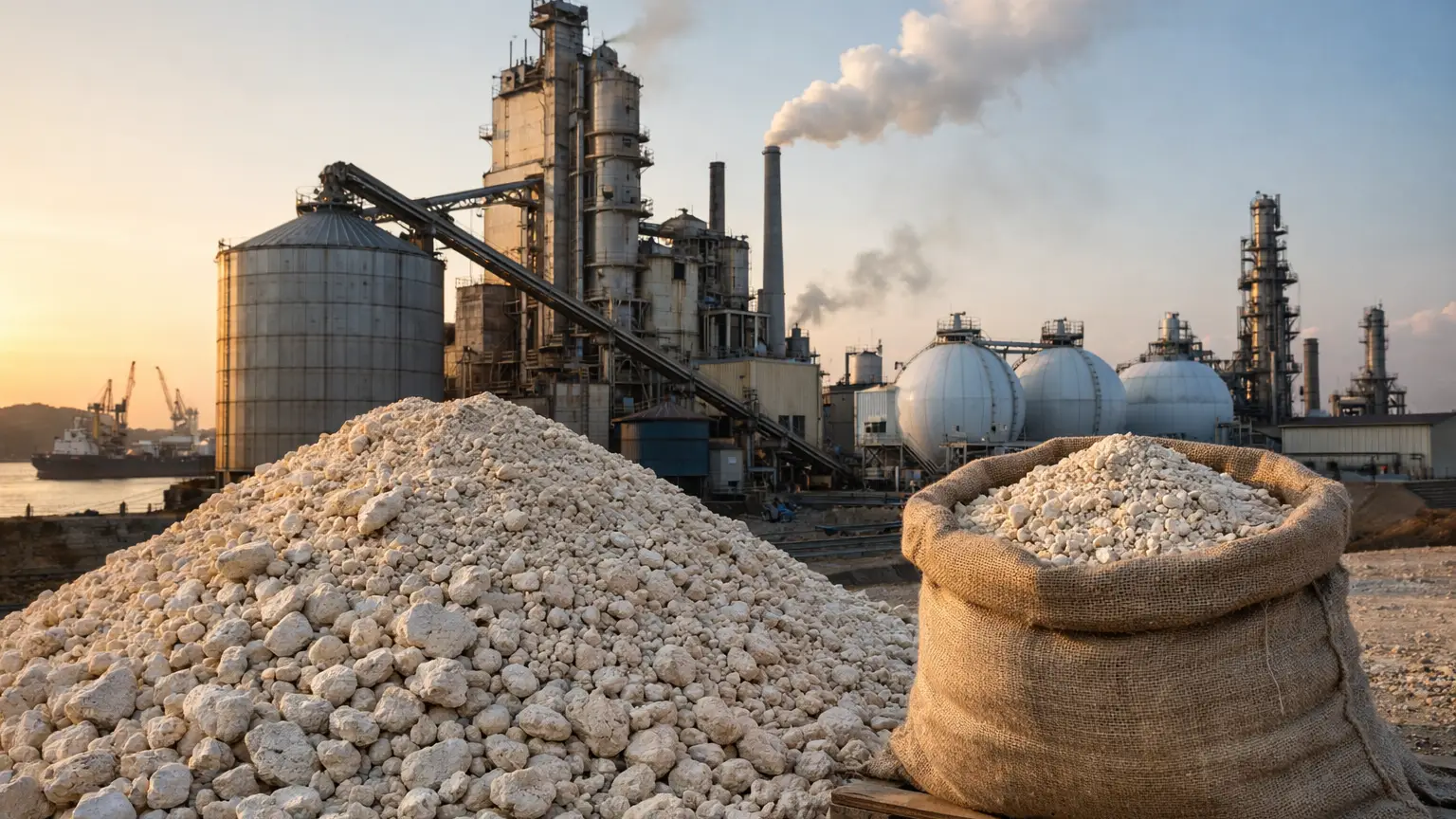
The phosphorus supply chain starts with phosphate rock extracted from mineral deposits.
Phosphate deposits occur in several regions, including North Africa, the Middle East, China, the United States, Brazil, and other countries. Morocco is particularly significant because of its exceptionally large reserves.
According to USGS data, Morocco held approximately 50 billion tonnes of phosphate rock reserves based on 2024 estimates. China was the world's largest phosphate rock producer in the same period, while Morocco ranked second.
Beneficiation of Phosphate Rock
Mined phosphate rock is not always suitable for direct processing. Beneficiation may be used to improve the concentration and quality of the phosphate material.
Depending on the ore characteristics, processing can include crushing, screening, washing, flotation, separation, and other techniques.
The objective is to produce a phosphate concentrate with characteristics appropriate for downstream processing.
Production of Phosphoric Acid
Phosphate rock is commonly processed with sulfuric acid to produce phosphoric acid.
This step is central to the production of several major phosphate fertilizers. The reaction generates phosphoric acid and phosphogypsum as a by-product.
Sulfur therefore represents a critical input into the phosphorus supply chain. A shortage or disruption in sulfur availability can affect phosphoric acid production even when phosphate rock supplies remain stable.
Manufacturing MAP and DAP
Phosphoric acid can be further processed into different fertilizer products.
Monoammonium phosphate (MAP) and diammonium phosphate (DAP) are two widely traded phosphate fertilizers. Ammonia is another major input into their production.
DAP generally contains both nitrogen and phosphorus, making it an important fertilizer for agricultural applications. MAP also supplies nitrogen and phosphorus but has a different nutrient ratio and chemical composition.
Transportation and International Trade
After production, phosphate fertilizers may travel across international supply chains before reaching agricultural markets.
Products can move by rail, truck, pipeline, vessel, or combinations of these transportation modes.
Shipping is particularly important for international fertilizer trade. The location of production relative to major agricultural markets therefore affects the final delivered cost.
Freight rates, port availability, vessel capacity, insurance costs, and geopolitical disruptions can all influence the economics of phosphate fertilizer trade.
The Importance of Sulfur and Ammonia
The phosphorus supply chain does not operate independently.
Sulfur is needed to produce sulfuric acid, while ammonia is required for many nitrogen-phosphorus fertilizer products. As a result, phosphate fertilizer prices can be influenced by developments in several commodity markets.
The World Bank has highlighted sulfur and ammonia as critical inputs for DAP production. Approximately one-third of global sulfur trade and around 15% of ammonia trade were reported to pass through the Strait of Hormuz.
This illustrates why chemical buyers need to evaluate upstream risks rather than focusing only on the finished fertilizer.
Global Concentration Creates Supply Chain Risks
Although phosphate rock resources are extensive, production and reserves are geographically concentrated.
USGS estimates that Morocco possesses around 68% of global phosphate rock reserves based on its reported figures. China is also a major producer, while countries including Egypt, Tunisia, Jordan, Saudi Arabia, Brazil, and the United States contribute to global supply.
This concentration can create strategic sourcing considerations for fertilizer producers and large-volume buyers.
From Fertilizer Plant to Farm
The final stage of the supply chain is distribution to agricultural markets.
Fertilizers may be sold directly to agricultural companies, distributors, cooperatives, traders, or other intermediaries. Product specifications, packaging, purity, nutrient content, granulation, and delivery terms can vary depending on the market.
For international buyers, procurement decisions often involve comparing suppliers based on product quality, minimum order quantity, delivery schedule, origin, payment terms, certification, and logistics.
Building a More Resilient Phosphorus Supply Chain
Supply chain resilience is becoming increasingly important for phosphorus buyers.
Companies can reduce exposure to individual disruptions by:
Maintaining multiple qualified suppliers
Monitoring phosphate rock and sulfur markets
Diversifying geographic sourcing
Tracking export regulations
Maintaining appropriate inventory levels
Comparing alternative fertilizer grades
Monitoring freight and shipping conditions
Establishing long-term relationships with reliable suppliers
The phosphorus supply chain demonstrates how a seemingly simple fertilizer product depends on multiple interconnected commodities, production facilities, transportation networks, and international trade policies. Understanding each stage can help chemical buyers make better-informed sourcing and supply planning decisions.
Sources: U.S. Geological Survey; World Bank; U.S. Geological Survey country data.
Acesulfame Potassium (E950) CAS: 55589-62-3