
Phosphorus chemicals form a strategically important part of the global chemical industry, supporting agriculture, food processing, animal nutrition, water treatment, detergents, industrial manufacturing, and emerging energy applications.
The market is closely connected to phosphate rock, phosphoric acid, sulfur, ammonia, fertilizer production, and international logistics. At the same time, new demand from lithium iron phosphate (LFP) batteries is expanding the role of phosphorus chemicals beyond traditional agricultural applications.
For manufacturers, distributors, and procurement teams, understanding these end uses and supply-chain dynamics is essential for managing sourcing, pricing, and long-term supply risks.
Major Applications of Phosphorus Chemicals
Phosphorus chemicals serve a wide range of downstream industries.
1. Fertilizers
Agriculture remains the dominant application for phosphate resources. Phosphoric acid is primarily converted into phosphate fertilizers such as MAP, DAP, and TSP.
Phosphorus is essential for plant root development, energy transfer, and seed formation, making it a critical agricultural nutrient.
2. Food and Feed Applications
Phosphate compounds are also used in food additives and animal feed supplements.
Food-related applications can include functions such as acidity regulation, buffering, texture management, and mineral fortification, depending on the specific phosphate compound and regulatory requirements.
3. Water Treatment
Phosphate chemicals can be used in water-treatment processes, including corrosion control and water-quality management.
4. Detergents and Cleaning Products
Certain phosphate compounds have historically been used in detergents and cleaning formulations because of their ability to support cleaning performance and water conditioning.
5. Industrial Applications
Phosphates are used in areas such as ceramics, metal treatment, anti-corrosion systems, and other industrial formulations.
6. Energy and Battery Materials
The expansion of LFP battery manufacturing is creating a newer source of phosphorus demand. This is increasing interest in phosphate rock, phosphoric acid, and related phosphorus-based intermediates for energy-storage applications.
Key Market Drivers
Several structural factors are shaping the phosphorus chemicals market.
Agricultural Demand
Global food production remains the fundamental demand driver for phosphate fertilizers. Population growth, crop yields, fertilizer affordability, and agricultural investment all influence phosphate consumption.
Food Security
Because phosphorus is essential for crop production and has no practical substitute as a plant nutrient, governments and agricultural markets increasingly view phosphate supply as a strategic issue.
LFP Battery Growth
The rapid development of lithium iron phosphate batteries is creating additional demand for phosphorus-based materials. This is gradually linking the phosphate industry with the electric-vehicle and energy-storage value chains.
Supply Concentration
Phosphate resources and downstream production are concentrated in a relatively limited number of regions. This makes geopolitical developments, mining policies, production outages, and trade restrictions important market variables.
Sulfur Availability
Sulfur is a critical input for phosphoric acid production. Disruptions to sulfur availability can therefore affect phosphate production even when fertilizer demand itself remains strong.
Global Phosphorus Supply Chain
The phosphorus chemicals supply chain generally follows an integrated sequence:
Phosphate Rock → Phosphoric Acid → Phosphate Chemicals → Fertilizers / Industrial Applications
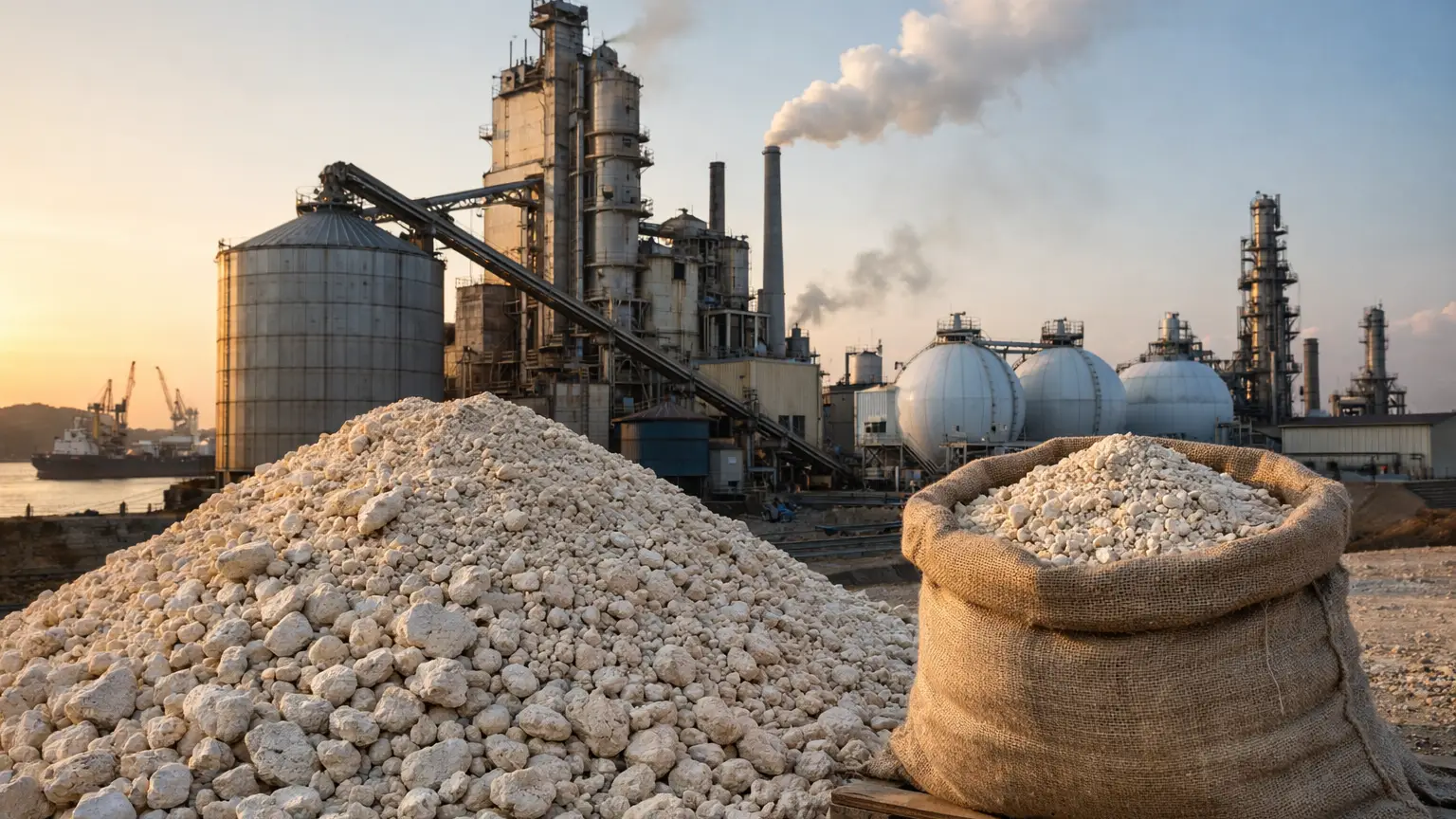
Phosphate rock is mined and processed into phosphoric acid, which can then be converted into fertilizers and other downstream phosphate products.
This structure means that disruptions at the mining or raw-material stage can eventually affect multiple downstream markets.
The supply chain is also highly international. Morocco, China, Jordan, Saudi Arabia, the United States, and other producing regions participate in different stages of phosphate production and trade.
Global Trade Patterns
International trade is particularly important for phosphoric acid and phosphate fertilizers.
World Bank WITS data for 2024 shows Morocco as the largest exporter of phosphoric acid and polyphosphoric acids by reported trade value, followed by China, Jordan, Senegal, and Israel. On the import side, India was the largest reported importer, followed by the European Union, Pakistan, the United States, and the Netherlands.
This trade structure highlights the importance of cross-border supply chains for countries that have substantial fertilizer and industrial phosphate demand but limited domestic production.
For import-dependent buyers, freight availability, port infrastructure, trade policy, and supplier diversification can therefore be as important as the headline chemical price.
China and North Africa Remain Important
China is an important participant in the global phosphate industry, while Morocco has a particularly significant position in phosphate resources and phosphoric-acid exports.
ICIS identifies China, Morocco, and the United States as accounting for nearly three-quarters of global phosphate production, while also highlighting significant deposits and production activity in the Middle East and South Pacific.
This concentration creates both opportunities and risks for international buyers.
Changes in Chinese export policy, Moroccan production schedules, Middle Eastern logistics, or mining regulations can influence availability and pricing in importing markets.
Logistics and Geopolitical Risk
Phosphorus chemicals are highly sensitive to logistics disruptions because the industry depends on international movement of raw materials, intermediates, and finished products.
The Strait of Hormuz is particularly relevant because it carries significant volumes of fertilizer-related trade and critical inputs. The World Bank estimates that nearly 15% of global DAP exports, about one-third of global sulfur trade, and around 15% of ammonia trade move through the Strait.
ICIS has also reported that disruptions to sulfur flows created a significant constraint on phosphate production during 2026.
For procurement teams, this means that geopolitical risk can move through the supply chain from sulfur and ammonia into phosphoric acid and ultimately phosphate products.

Emerging Energy Applications
The phosphorus industry is increasingly connected to the energy-transition economy.
LFP batteries use phosphate-based chemistry, creating additional demand for phosphorus-containing intermediates. The African Development Bank notes that industrial phosphate applications are a smaller share of total demand but are strategically important, with LFP battery adoption driving additional phosphate demand for energy storage and electric vehicles.
This creates a new connection between two traditionally separate demand centers:
Food Security + Energy Storage
As battery manufacturing expands, phosphorus resources may become increasingly important to both agricultural and energy supply chains.
Competitive Intelligence
Companies monitoring phosphorus chemicals should track several indicators:
Phosphate Rock
Monitor mining capacity, reserves, production costs, and regulatory developments.
Phosphoric Acid
Track operating rates, new downstream capacity, maintenance, and regional production economics.
Sulfur
Watch sulfur availability and prices because sulfur is a key input into phosphoric-acid production.
Chinese Trade Policy
Export restrictions or changes in domestic supply priorities can affect global availability.
Fertilizer Affordability
Farmer purchasing power and crop economics influence fertilizer demand and downstream phosphate consumption.
Battery Demand
Track LFP battery capacity additions and investment because this represents a growing non-agricultural source of phosphorus demand.
Procurement Considerations
Procurement teams purchasing phosphorus chemicals should evaluate the full supply chain rather than focusing only on supplier quotations.
Important considerations include:
Supplier geographic diversification
Phosphate rock availability
Phosphoric-acid production capacity
Sulfur exposure
Freight and shipping conditions
Export policies
Inventory levels
Product specifications
Long-term supply agreements
Alternative sourcing regions
Maintaining relationships with suppliers from multiple producing regions can help reduce exposure to individual-country disruptions.
Looking Ahead
The phosphorus chemicals market is evolving from a predominantly agriculture-driven industry toward a broader chemical and materials ecosystem.
Fertilizers will remain the primary demand center, but food, animal nutrition, water treatment, industrial applications, and LFP battery production are creating additional sources of demand.
At the same time, concentrated phosphate resources, sulfur availability, geopolitical risk, and international trade policies will continue to influence market conditions.
For manufacturers and procurement professionals, the key strategic issue is therefore not simply phosphorus availability. It is the ability to secure reliable access to the entire phosphorus value chain, from raw materials and phosphoric acid through downstream chemical production and international logistics.
Key Takeaways
Phosphorus chemicals support agriculture, food, animal nutrition, water treatment, detergents, and industrial applications.
Fertilizers remain the dominant downstream use of phosphate resources.
LFP battery growth is creating an increasingly important new source of phosphorus demand.
Global phosphate production and resources are geographically concentrated.
Sulfur availability can directly affect phosphoric-acid and phosphate production.
International trade and logistics are critical to import-dependent markets.
Procurement teams should monitor raw materials, trade policy, freight, and emerging battery demand together.
Sources
S&P Global Commodity Insights — Chemical Economics Handbook: Phosphoric Acid
African Development Bank — Phosphate Use and Forecasted Growth in Demand
ICIS — Phosphates Market Intelligence
World Bank — Commodity Markets Outlook, April 2026
World Bank WITS — Phosphoric Acid and Polyphosphoric Acids Trade Data
Diammonium Phosphate (Technical 16-46) - Vietnam CAS: 7783-28-0