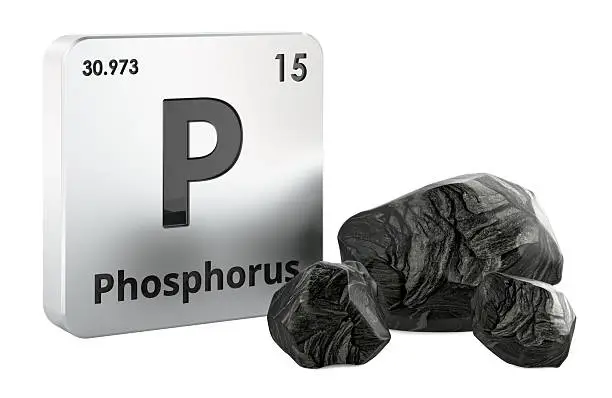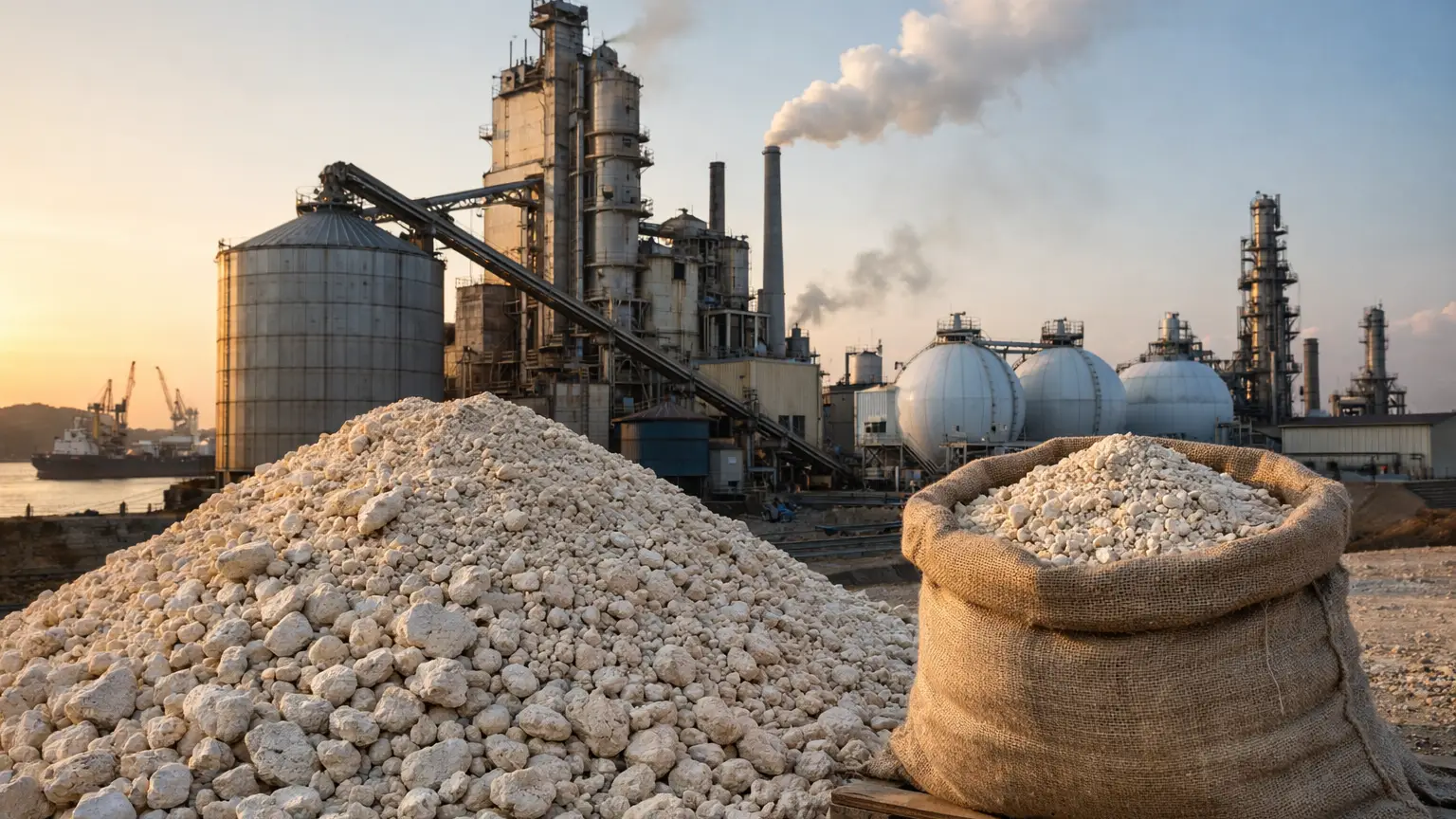
Phosphorus is one of the most important nutrients in modern agriculture and a strategically important raw material for the global chemical industry. Most phosphorus resources ultimately support fertilizer production, but phosphorus chemicals also serve food, animal nutrition, water treatment, industrial manufacturing, and emerging energy applications.
The importance of phosphorus is becoming more visible as global food demand rises, fertilizer supply chains face geopolitical and logistics risks, and new applications such as lithium iron phosphate (LFP) batteries create additional demand.
For chemical manufacturers, distributors, and procurement teams, phosphorus is therefore more than a fertilizer raw material. It is a critical link between agriculture, food security, industrial chemistry, and the energy transition.
Phosphorus and Global Food Security
Phosphorus is essential for plant development, including root growth, energy transfer, and seed formation. Unlike many industrial inputs, there is no practical substitute for phosphorus as a plant nutrient.
Most phosphate rock is processed into phosphoric acid and subsequently into phosphate fertilizers. USGS data shows that more than 95% of U.S. phosphate rock production in 2025 was used to manufacture wet-process phosphoric acid and superphosphoric acid, which then supported fertilizer and animal-feed applications.
This makes phosphorus availability directly relevant to agricultural productivity.
FAO and the International Fertilizer Association also describe mineral fertilizers as a major contributor to global crop production, with fertilizer use increasingly connected to the challenge of producing sufficient food while improving nutrient efficiency and sustainability.
Fertilizers Remain the Core Application
Agriculture remains by far the largest downstream market for phosphate resources.
Phosphorus is primarily converted into products such as:
Diammonium phosphate (DAP)
Monoammonium phosphate (MAP)
Triple superphosphate (TSP)
Phosphoric acid
Other phosphate fertilizers
According to the African Development Bank, agriculture represented around 95% of phosphate ore demand in 2025, while food and feed additives accounted for about 10% and industrial applications represented roughly 5% in its application framework.
The exact shares vary by methodology and whether demand is measured by ore, nutrient content, or downstream products, but the broader conclusion is consistent: fertilizers remain the dominant phosphorus application.
Phosphorus Supply Is Strategically Important
Phosphate rock is the principal commercial source of phosphorus. This creates a supply chain that begins with mining and continues through beneficiation, phosphoric-acid production, fertilizer manufacturing, and international distribution.
The concentration of phosphate resources and production in a limited number of countries makes the market sensitive to:
Mining capacity
Production costs
Export policies
Geopolitical developments
Energy prices
Sulfur availability
Freight conditions
Weather and agricultural demand
USGS estimates that global phosphate-rock production increased by about 5% in 2025, with China, Morocco, the United States, and Russia remaining among the leading producers. It also projects global phosphate capacity to expand substantially through 2029.
Food Security and Fertilizer Affordability
Phosphorus availability alone does not determine fertilizer demand. Farmers must also be able to afford fertilizer.
When fertilizer prices rise faster than crop economics can support, farmers may delay purchases, reduce application rates, or adjust crop decisions.
The World Bank projected DAP prices to increase by nearly 6% in 2026 before declining by around 10% in 2027 as additional capacity comes online. However, it identified renewed Chinese export restrictions and prolonged disruption to the Strait of Hormuz as important upside risks.
This demonstrates why phosphorus markets need to be evaluated alongside agricultural commodity prices, fertilizer affordability, and international trade conditions.
Emerging Industrial Applications
Although agriculture dominates phosphorus demand, industrial applications are becoming increasingly important.
Phosphorus chemicals are used in areas such as:
Food additives
Animal-feed supplements
Water treatment
Metal treatment
Industrial formulations
Detergents and cleaning products
Chemical manufacturing
Battery materials
These applications create additional demand streams that can influence the long-term economics of phosphate production.
LFP Batteries Create a New Demand Driver
One of the most significant emerging applications is the growth of lithium iron phosphate (LFP) batteries.
LFP chemistry uses iron and phosphate rather than the nickel and cobalt used in many other lithium-ion battery chemistries.
The African Development Bank identifies LFP batteries as an important emerging source of phosphate demand, particularly for electric vehicles and energy-storage systems. Its analysis estimates that battery-related phosphate demand could become substantial by 2030 as LFP adoption expands.
This creates an increasingly important connection between two strategic priorities:
Food security and energy storage.
Both sectors depend on secure access to phosphorus resources, although they use the material through different value chains.
Phosphorus and the Circular Economy
Because phosphate rock is a finite mineral resource, recovery and recycling are becoming increasingly relevant.
Potential secondary sources include:
Wastewater
Sewage
Agricultural residues
Food-processing waste
Animal waste
Phosphate-rich industrial streams
Recovery can help reduce pressure on primary resources while improving nutrient management.

However, recycling phosphorus at commercial scale remains technically and economically challenging in many markets. The development of economically viable recovery systems could become an important long-term component of phosphorus security.
Global Trade Risks
Phosphorus markets are highly dependent on international trade.
The supply chain involves movement of:
Phosphate Rock → Phosphoric Acid → Phosphate Fertilizers / Industrial Chemicals → End Markets
International shipping therefore plays an important role in maintaining supply to fertilizer-importing countries.
The World Bank notes that nearly 15% of global DAP exports move through the Strait of Hormuz, alongside about one-third of global sulfur trade and around 15% of ammonia trade. Sulfur and ammonia are critical inputs for phosphate fertilizer production.
Consequently, a disruption to major trade routes can affect phosphorus markets indirectly even when phosphate mines and fertilizer plants continue operating.
Procurement Considerations
Phosphorus-related procurement requires a broader approach than simply comparing fertilizer or phosphoric-acid prices.
Procurement teams should monitor:
Phosphate-rock supply
Phosphoric-acid capacity
Fertilizer production rates
Sulfur availability
Chinese export policies
Freight costs
Major shipping routes
Inventory levels
Agricultural demand
LFP battery investment
Supplier diversification is particularly important for import-dependent buyers.
Companies may also benefit from maintaining alternative suppliers across different geographic regions and reviewing long-term contracts alongside spot-market opportunities.
Competitive Intelligence
Companies monitoring the phosphorus industry should track several indicators.
Mining and Capacity
New phosphate mines and processing projects can change long-term supply availability.
Fertilizer Demand
Crop economics and fertilizer affordability remain the primary demand indicators.
Industrial Demand
Food additives, animal nutrition, water treatment, and other applications provide additional demand beyond agriculture.
Battery Demand
LFP battery production is an increasingly important emerging phosphorus application.
Trade Policy
Export restrictions and geopolitical developments can rapidly change regional availability.
Recycling
Commercial phosphorus recovery could become increasingly important as companies and governments focus on resource efficiency.
Looking Ahead
Phosphorus is becoming strategically important across several interconnected industries.
Agriculture will remain the central source of demand because phosphorus is essential to crop production and global food security. At the same time, industrial applications and LFP battery manufacturing are creating new demand pathways.
The future phosphorus market will therefore depend on more than fertilizer consumption. Mining investment, new production capacity, trade policy, sulfur availability, logistics, recycling technology, and battery-market growth will all influence the industry's development.
For manufacturers and procurement teams, the key priority is to understand phosphorus as a global value chain rather than a single fertilizer commodity.
Key Takeaways
Phosphorus is essential for crop production and has no practical substitute as a plant nutrient.
Fertilizers remain the dominant application for phosphate resources.
Food, animal nutrition, water treatment, and industrial applications provide additional demand.
LFP battery growth is creating an emerging source of phosphorus demand.
Global phosphate supply is geographically concentrated, creating trade and geopolitical risks.
Sulfur, ammonia, freight, and major shipping routes can indirectly influence phosphate availability and pricing.
Phosphorus recovery and recycling could become increasingly important for long-term resource security.
Procurement teams should monitor both agricultural and emerging industrial demand when planning phosphorus-related sourcing.
Sources
U.S. Geological Survey (USGS) — Phosphate Rock Statistics and Information
USGS — Mineral Commodity Summaries 2026: Phosphate Rock
African Development Bank — Phosphate Use and Forecasted Growth in Demand
World Bank — Commodity Markets Outlook, April 2026
Food and Agriculture Organization (FAO) — Inorganic Fertilizers: 2002–2023
FAO / International Fertilizer Association — Sustainable Agrifood Systems and Fertilizer Management
Phosphoric Acid (85%) (E338) CAS: 7664-38-2