
Phosphorus in NPK Fertilizers: Why Phosphate Availability Matters for Crop Productivity
Nitrogen, phosphorus, and potassium are the three primary nutrients supplied through NPK fertilizers. Each performs different functions in plant growth, making balanced nutrient management important for agricultural productivity.
Phosphorus is particularly important during early plant development and plays a major role in energy transfer, root development, flowering, and seed formation.
The Role of Phosphorus in Plants
Phosphorus participates in several fundamental biological processes.
It is involved in energy transfer within plants, including processes associated with ATP. It also contributes to root development, cell division, flowering, seed formation, and the movement of energy and nutrients throughout plant tissues.
Adequate phosphorus availability is therefore important for establishing healthy crops and supporting development throughout the growing cycle.
Why Phosphorus Is Included in NPK Fertilizers
NPK fertilizers combine nitrogen, phosphorus, and potassium in different nutrient ratios.
The phosphorus component is generally expressed as P₂O₅ on fertilizer labels, even though plants absorb phosphorus in chemical forms such as phosphate ions.
Different crops and soils require different nutrient management strategies. A fertilizer formulation that works well for one crop or soil condition may not be appropriate for another.
Phosphorus and Root Development
Phosphorus is particularly important during early plant growth.
Adequate phosphorus availability can support root development and help crops establish themselves after germination or transplanting.
A strong root system is important because roots are responsible for water and nutrient uptake. This makes phosphorus management particularly relevant during crop establishment.
Phosphorus Deficiency
When phosphorus availability is insufficient, plants may show reduced growth and delayed development.
Symptoms can vary depending on crop type, plant age, soil conditions, temperature, and other nutrient interactions. In some crops, phosphorus deficiency may be associated with dark green or purplish coloration.
However, visual symptoms alone are not always sufficient for diagnosing nutrient deficiencies. Soil and plant analysis can provide more reliable information for fertilizer planning.
Soil Conditions Affect Phosphorus Availability
The amount of phosphorus present in soil does not necessarily represent the amount immediately available to plants.
Soil pH, mineral composition, moisture, temperature, and interactions with other elements can affect phosphorus availability.
In strongly acidic soils, phosphorus can become associated with iron and aluminum compounds. In alkaline or calcareous soils, phosphorus can react with calcium compounds.
This means fertilizer recommendations should consider soil conditions rather than relying solely on a standard application rate.
DAP and MAP in Phosphorus Fertilization
DAP and MAP are widely used phosphorus-containing fertilizers.
DAP supplies both nitrogen and phosphorus, while MAP also provides nitrogen and phosphorus at a different nutrient ratio.
The choice between products depends on factors such as crop nutrient requirements, soil conditions, fertilizer availability, application method, and local agronomic recommendations.
Phosphorus Use Efficiency
Applying more phosphorus does not automatically produce better crop results.
Efficient phosphorus management aims to provide sufficient nutrients while avoiding unnecessary application. This is important because excess phosphorus can contribute to nutrient losses and environmental problems.
FAO's latest cropland nutrient balance assessment reported a global phosphorus surplus of approximately 7 million tonnes in 2023, equivalent to around 4 kg of phosphorus per hectare of cropland.
Improving phosphorus use efficiency can therefore support both agricultural productivity and environmental management.
Phosphorus and Water Quality
Phosphorus losses from agricultural land can contribute to nutrient enrichment in water bodies.
When excessive phosphorus reaches lakes, rivers, or coastal systems, it can contribute to eutrophication and algal growth.
Better fertilizer timing, appropriate application rates, soil testing, erosion control, and improved nutrient management can help reduce unnecessary phosphorus losses.
The Importance of Site-Specific Fertilizer Management
Agricultural phosphorus requirements vary considerably between regions and fields.
Crop type, soil characteristics, previous fertilizer applications, expected yield, rainfall, irrigation, and nutrient availability can all influence fertilizer requirements.
Site-specific nutrient management can therefore help farmers apply phosphorus where and when it is most useful.
Phosphorus remains a critical component of NPK fertilizer systems because of its role in plant development and agricultural productivity. At the same time, improving phosphorus use efficiency is becoming increasingly important as agriculture seeks to balance productivity, fertilizer costs, and environmental sustainability.
Sources: FAO; International Fertilizer Association; FAO fertilizer research resources.
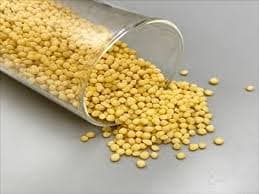
Diammonium Phosphate (Technical 16-46) - Vietnam CAS: 7783-28-0